
Photorealistic vs Conceptual Rendering: What Developers Should Choose?
In global real estate development, visual presentation plays a crucial role in securing approvals, attracting investors, and accelerating sales.
One common question developers ask is:
Should we choose conceptual rendering or photorealistic 3D rendering?
Both styles serve different purposes. Choosing the right one at the right stage of your project can save time, reduce costs, and improve marketing performance.
This guide explains the difference and helps you decide strategically.
What Is Conceptual Rendering?
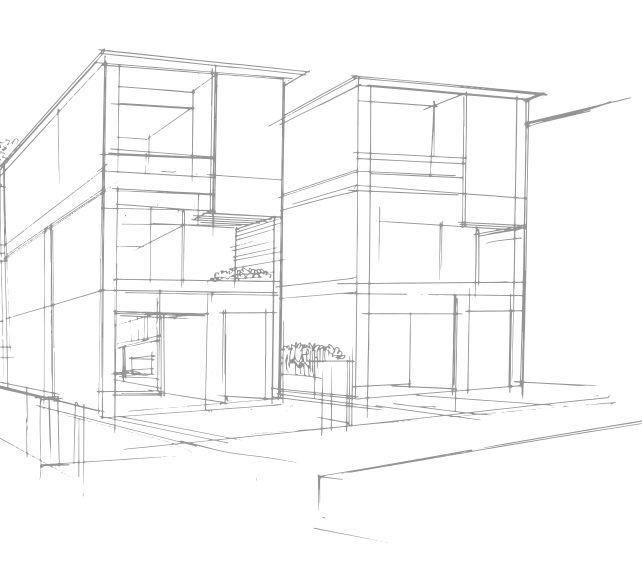
Conceptual rendering (also called architectural concept visualization) focuses on communicating design ideas rather than final realism.
It typically features:
- Sketch-style visuals
- Watercolor or artistic effects
- Simplified materials
- Minimal environmental detailing
- Soft lighting
When to Use Conceptual Rendering
✔ Early design presentations
✔ Client idea exploration
✔ Planning permission discussions
✔ Architectural competitions
✔ Internal stakeholder reviews
Conceptual renders are faster to produce and more flexible for design changes.
They communicate vision without overcommitting to final details.
What Is Photorealistic 3D Rendering?
Photorealistic 3D rendering replicates real-world lighting, materials, and environmental conditions.
It includes:
- Accurate textures and finishes
- Realistic sunlight and shadows
- Detailed landscaping
- Reflections and atmospheric effects
- Human scale and lifestyle elements
This is typically referred to as 3D exterior rendering services or architectural visualization services in global markets.
When to Use Photorealistic Rendering
✔ Real estate marketing campaigns
✔ Pre-construction sales
✔ Investor presentations
✔ Website and brochure visuals
✔ Luxury property promotions
Photorealistic rendering is designed to sell, not just explain.
Key Differences: Conceptual vs Photorealistic Rendering
| Factor | Conceptual Rendering | Photorealistic Rendering |
|---|---|---|
| Purpose | Design communication | Marketing & sales |
| Detail Level | Low to medium | High |
| Production Time | Faster | More time-intensive |
| Flexibility | High during early design | Limited once finalized |
| Emotional Impact | Moderate | Strong |
Developers working in competitive markets like the US, UK, UAE, and Australia often use both at different stages.
Cost Considerations
Conceptual rendering generally costs less because:
- Fewer details are required
- Lighting setup is simpler
- Textures are not fully developed
Photorealistic exterior rendering requires:
- Advanced lighting simulation
- Detailed material mapping
- High-resolution output
- Post-production refinement
While it may cost more, its return on investment in marketing and pre-sales is significantly higher.
Which One Should Developers Choose?
The decision depends on your project stage:
Early Stage (Concept & Approval Phase)
Choose conceptual architectural rendering to present ideas and allow flexibility.
Mid to Late Stage (Marketing & Sales Phase)
Invest in photorealistic 3D exterior rendering services to attract buyers and investors.
Most successful global developers use conceptual visuals for internal discussions and photorealistic renders for public-facing marketing.
Why Photorealistic Rendering Drives Faster Sales
Buyers respond to realism.
When potential clients can see:
- Natural sunlight hitting the facade
- Real landscaping and cars
- Lifestyle context
- Accurate materials
They connect emotionally.
Emotional connection accelerates decision-making which shortens sales cycles.
This is why real estate 3D rendering services are considered a strategic marketing investment worldwide.
Strategic Recommendation for Developers
If your goal is:
- Faster pre-sales
- Higher perceived project value
- Strong investor confidence
- Premium brand positioning
Then photorealistic architectural visualization is essential.
However, during early concept stages, conceptual rendering remains valuable for flexibility and speed.
The most efficient strategy is not choosing one over the other but using each at the right time.
Both conceptual and photorealistic rendering serve important roles in modern real estate development.
Conceptual rendering communicates ideas.
Photorealistic 3D rendering converts interest into commitment.
Understanding the difference helps developers reduce risk, optimize budgets, and maximize project performance in global markets.